An exquisite and rare Italian Louis XVI period Neoclassical gilded and elaborately carved wall mirror, circa 1780-90. The rectangular original mirror plate with carved and gilded surround; the crest decorated with a female bust with a crown of acanthus leaves; the trailing foliate carving extends outward and down the sides of the top. The carving of exceptional quality and craftsmanship. With original wood back support.
Mirrors of this period and style were intended for intimate rooms, designed to amplify candlelight. The classical acanthus leaf motif is famous as the defining characteristic of Neoclassical design. Its use became a visual shorthand for classical refinement and sophistication in the Neoclassical period, symbolizing vitality and growth; the lush, curling lines of the stylized leaf represent nature's abundance, vitality, and organic movement.
Florence, Italy, circa 1780-90
Size: 30 1/2" high x 19" wide at top x 18" wide at base x 4 1/2" deep
An exquisite and rare Italian Louis XVI period Neoclassical gilded and elaborately carved wall mirror, circa 1780-90. The rectangular original mirror plate with carved and gilded surround; the crest decorated with a female bust with a crown of acanthus leaves; the trailing foliate carving extends outward and down the sides of the top. The carving of exceptional quality and craftsmanship. With original wood back support.
Mirrors of this period and style were intended for intimate rooms, designed to amplify candlelight. The classical acanthus leaf motif is famous as the defining characteristic of Neoclassical design. Its use became a visual shorthand for classical refinement and sophistication in the Neoclassical period, symbolizing vitality and growth; the lush, curling lines of the stylized leaf represent nature's abundance, vitality, and organic movement.
Florence, Italy, circa 1780-90
Size: 30 1/2" high x 19" wide at top x 18" wide at base x 4 1/2" deep

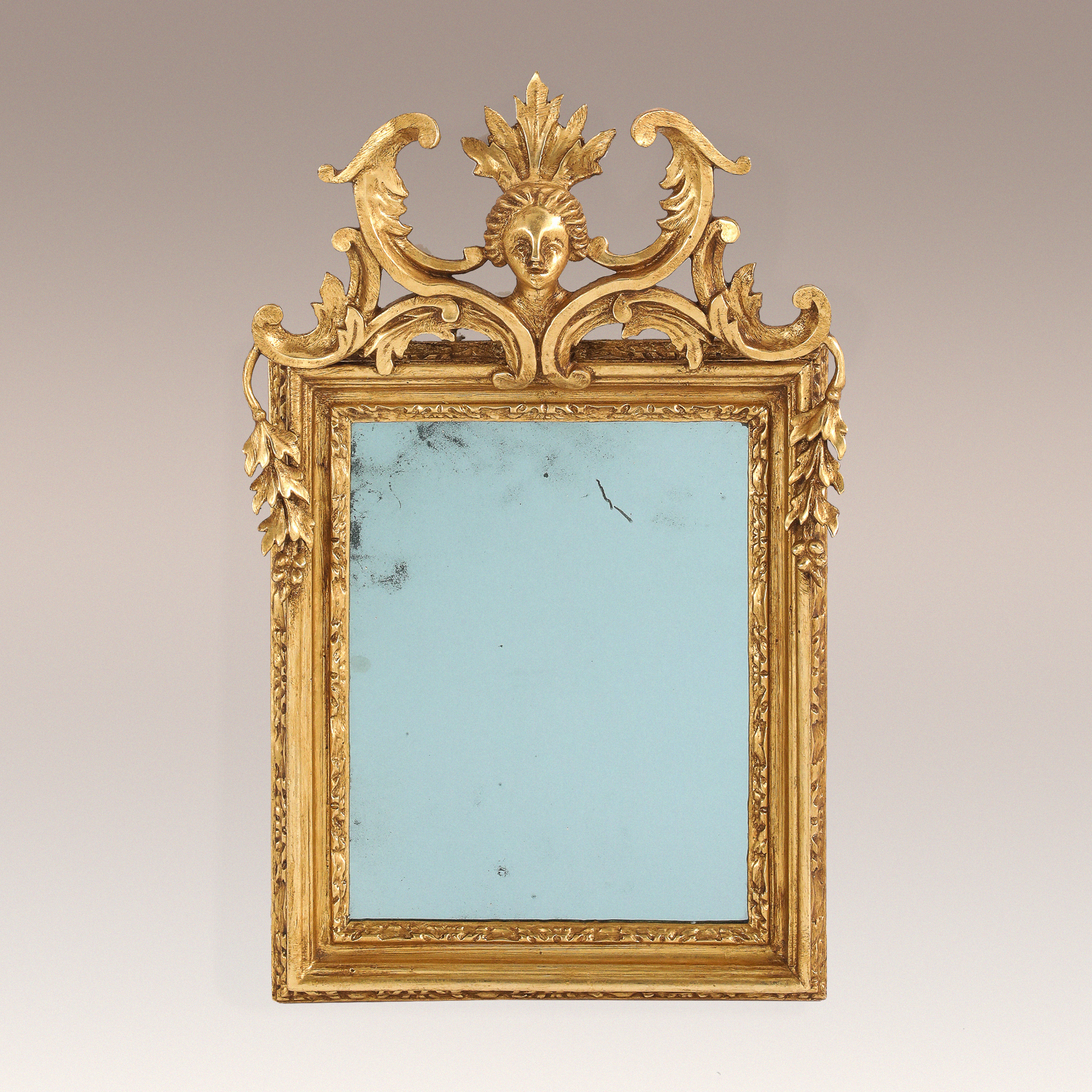 Image 1 of 14
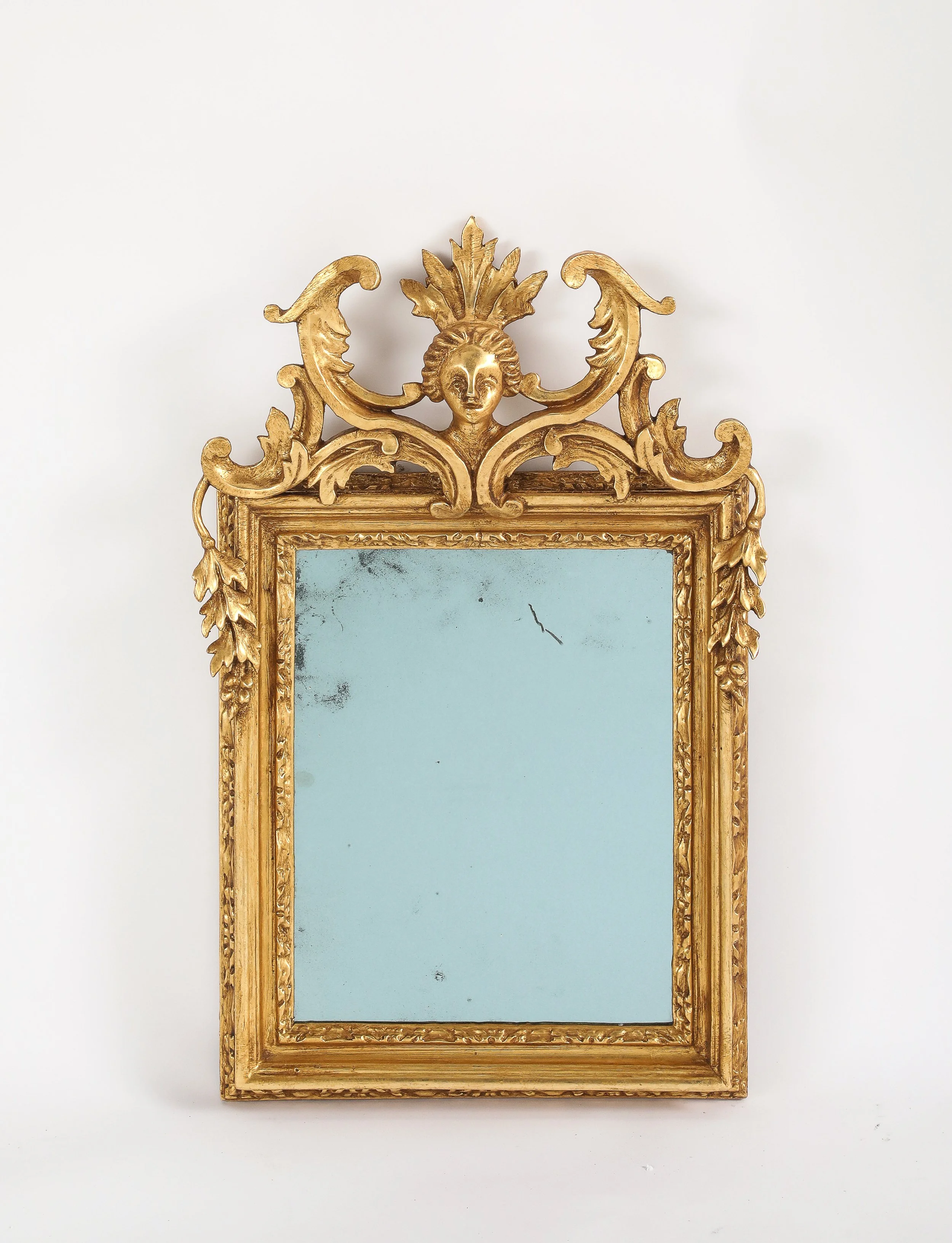 Image 2 of 14
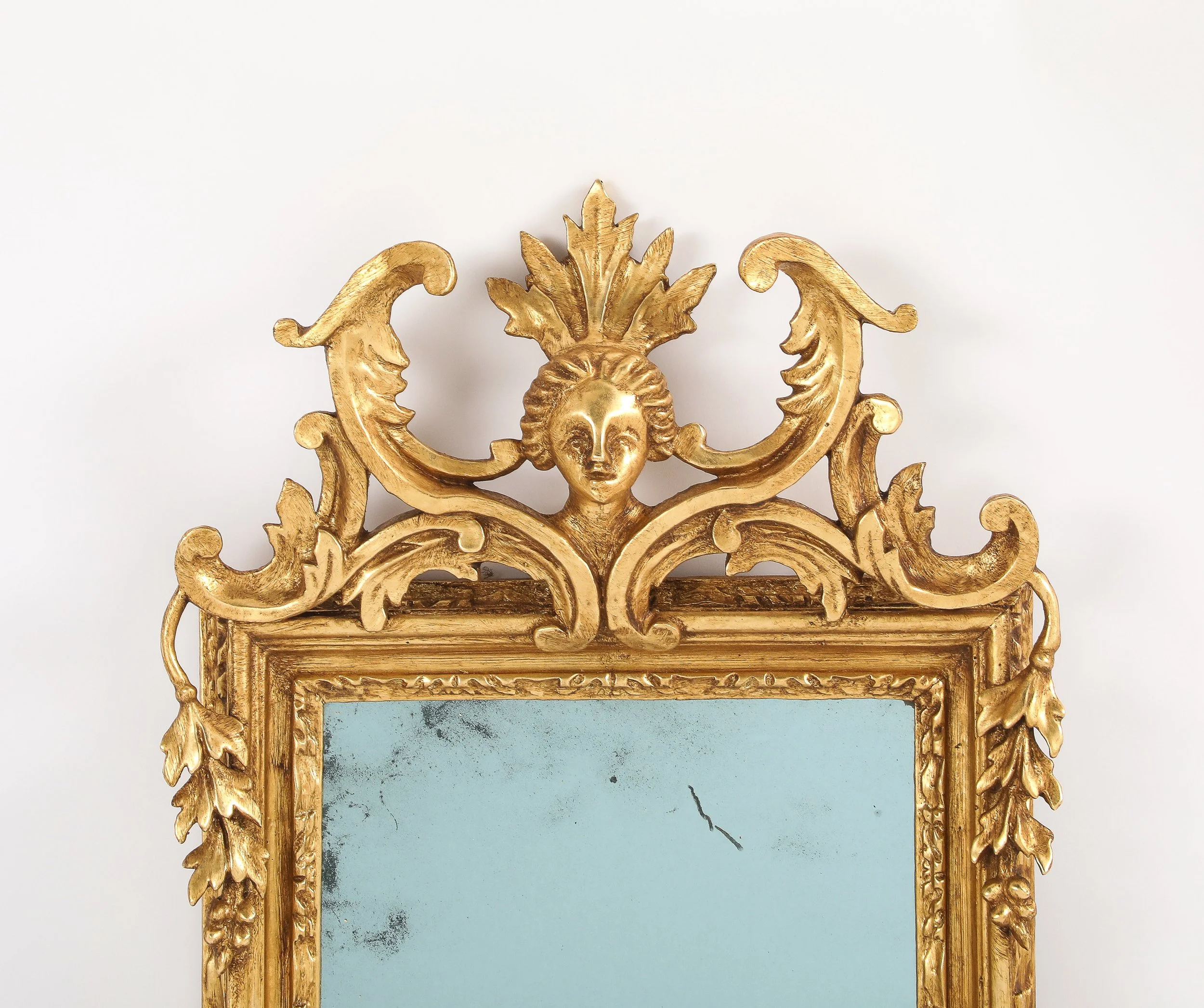 Image 3 of 14
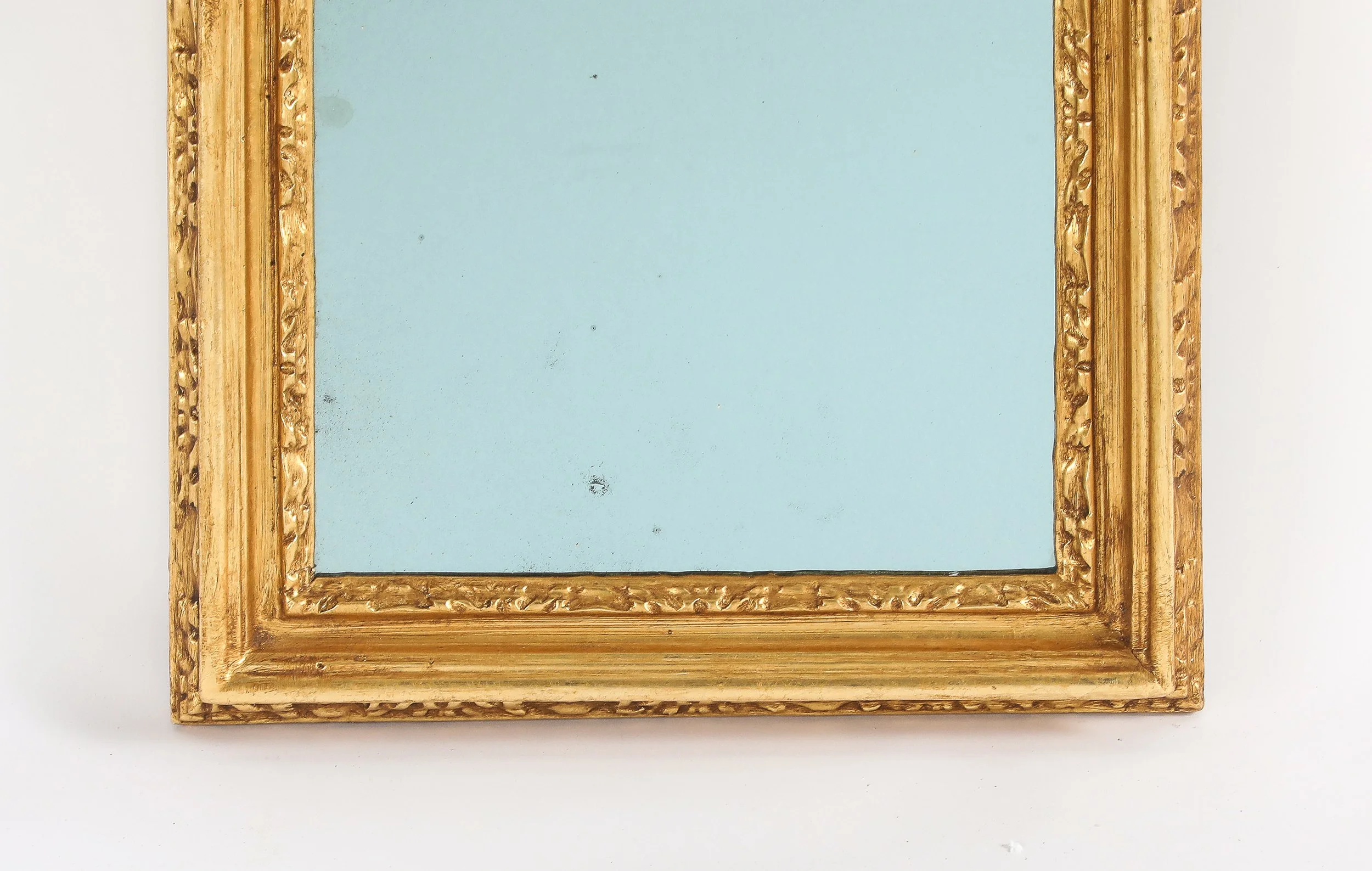 Image 4 of 14
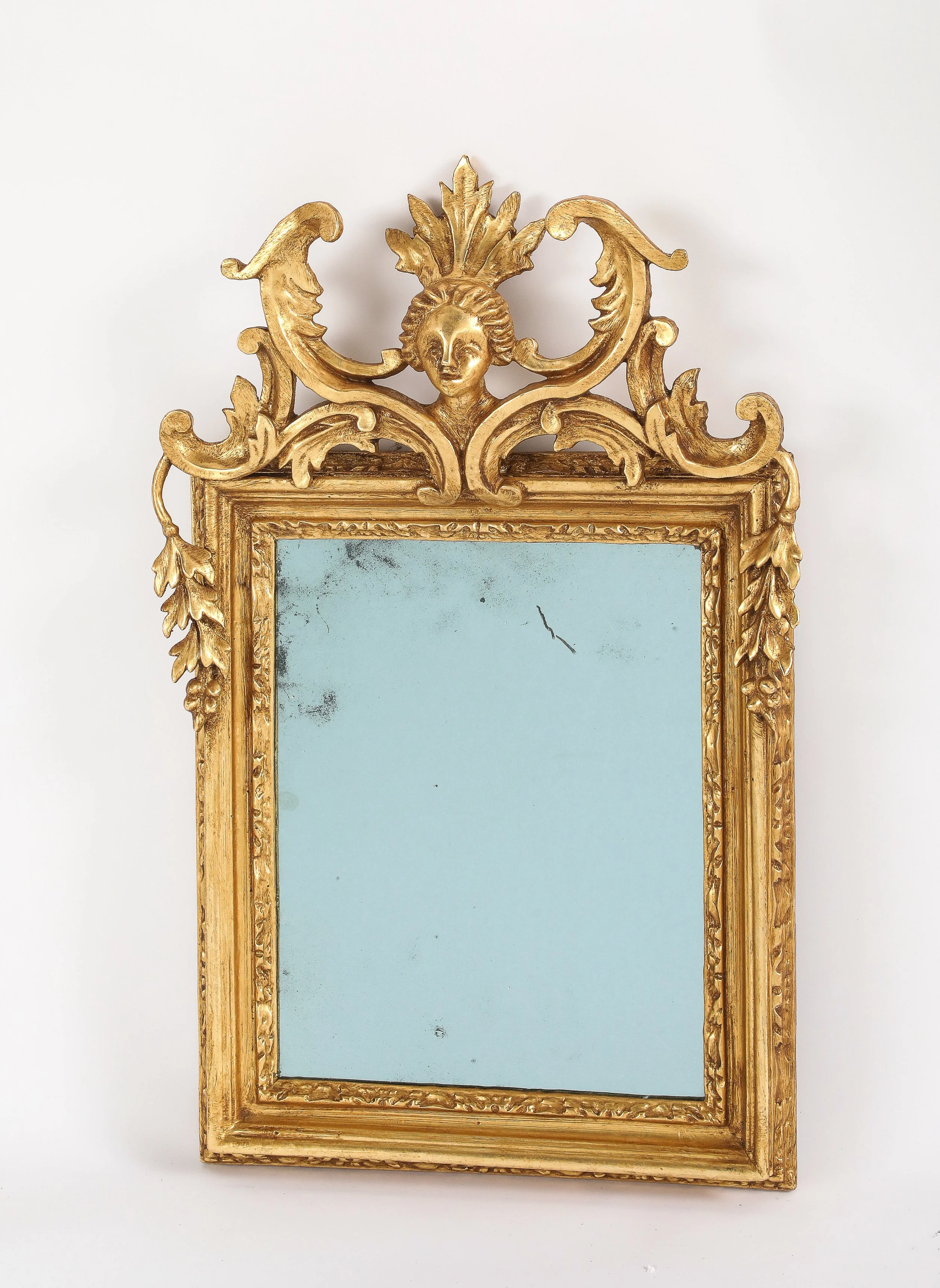 Image 5 of 14
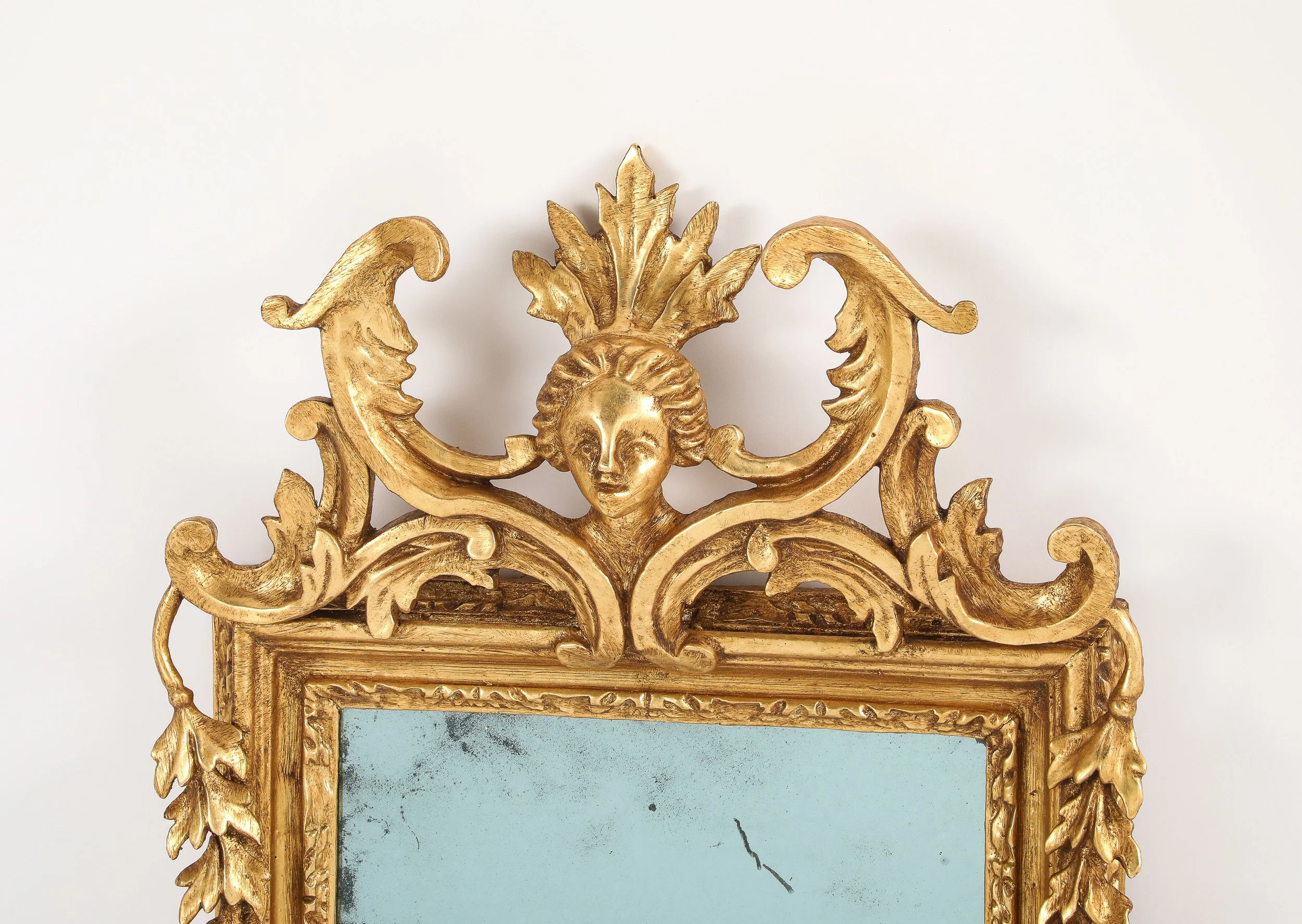 Image 6 of 14
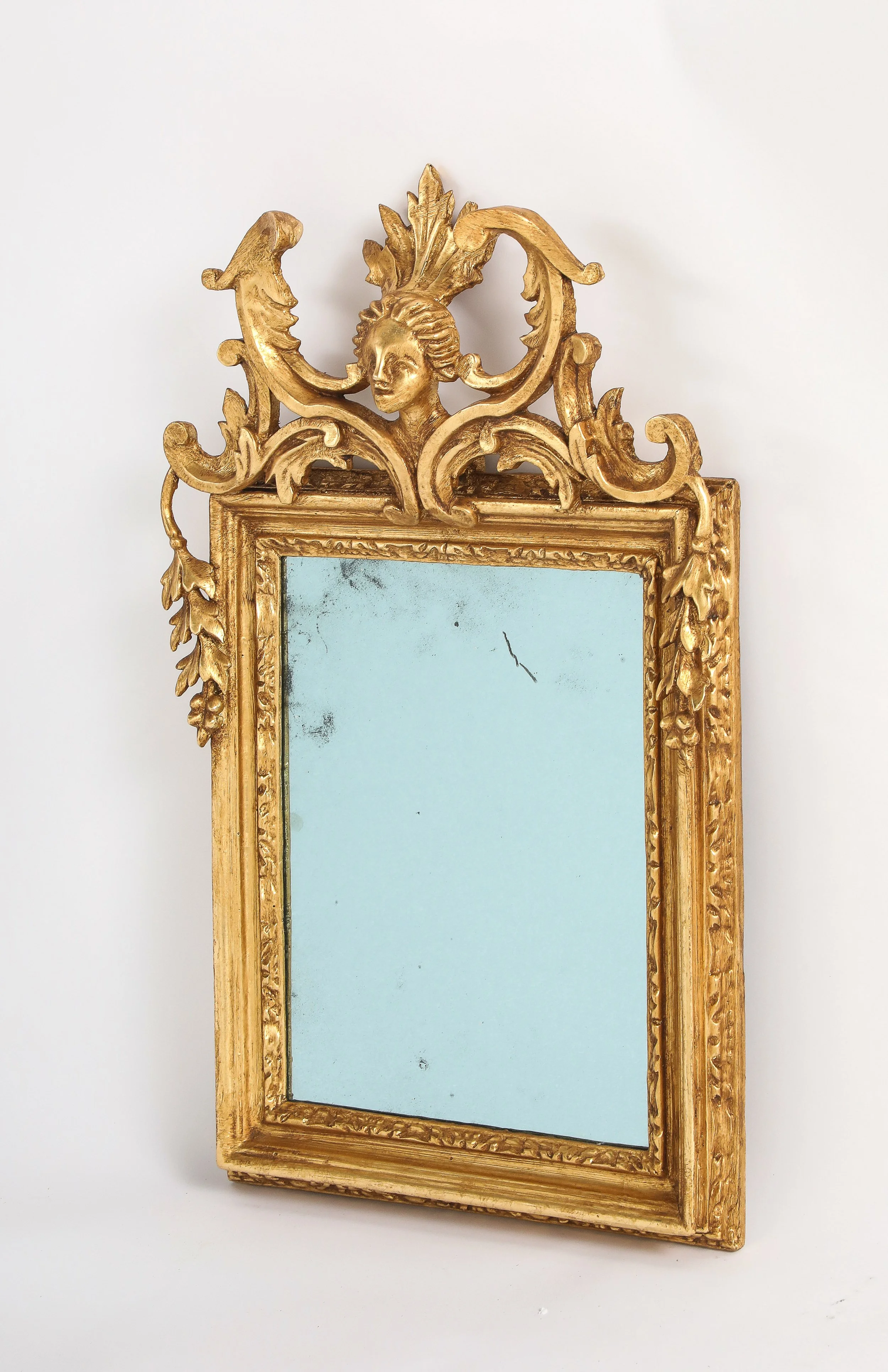 Image 7 of 14
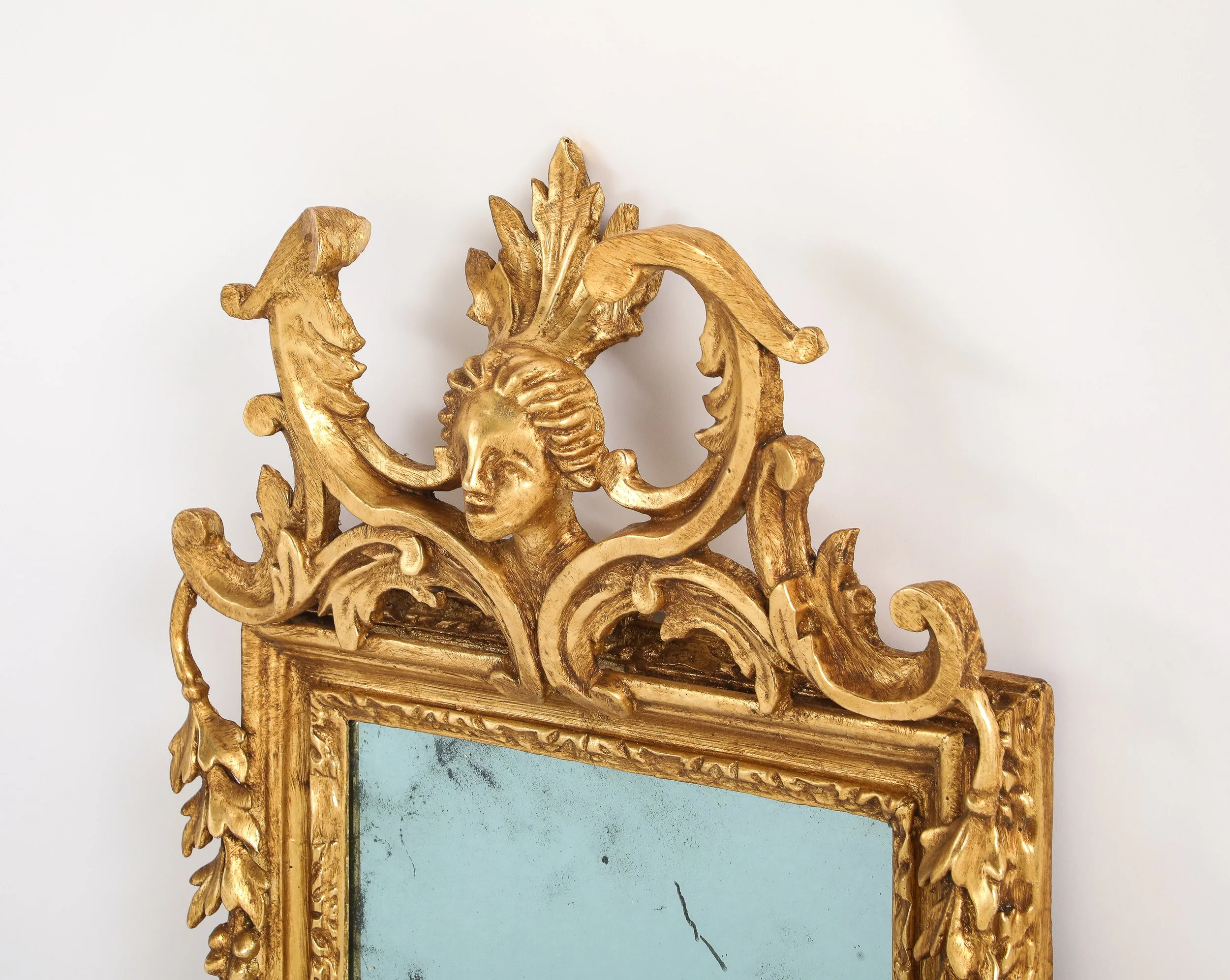 Image 8 of 14
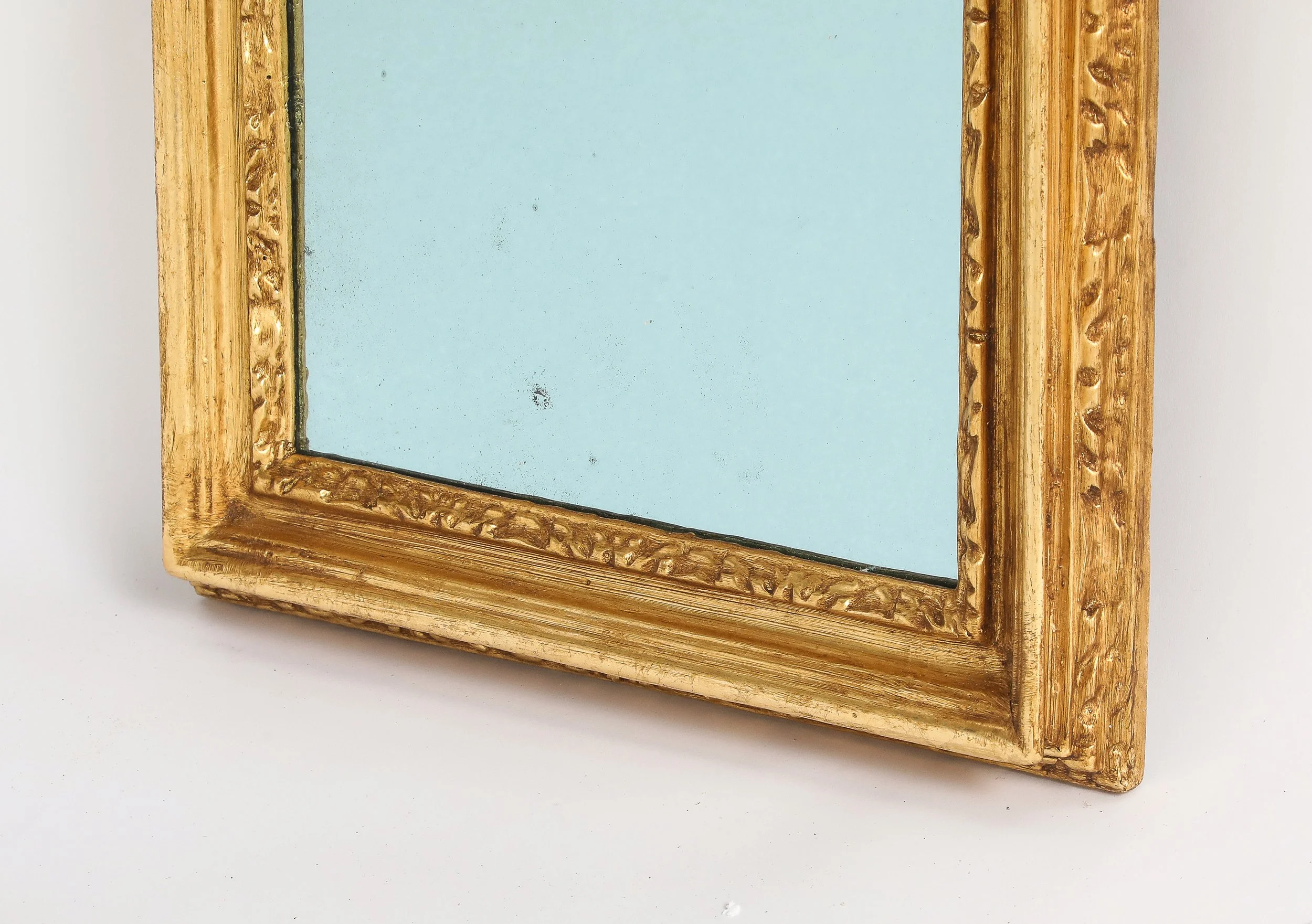 Image 9 of 14
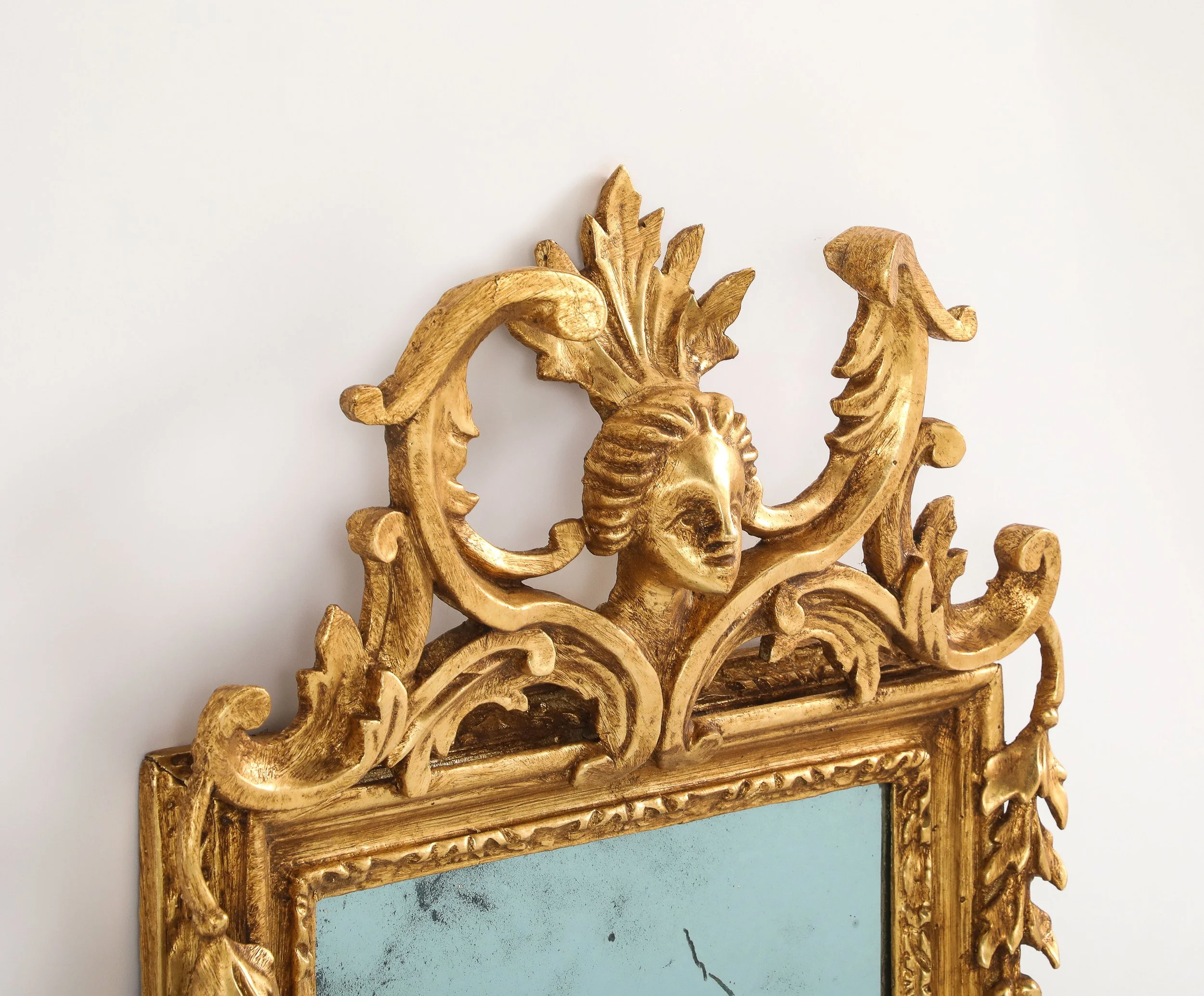 Image 10 of 14
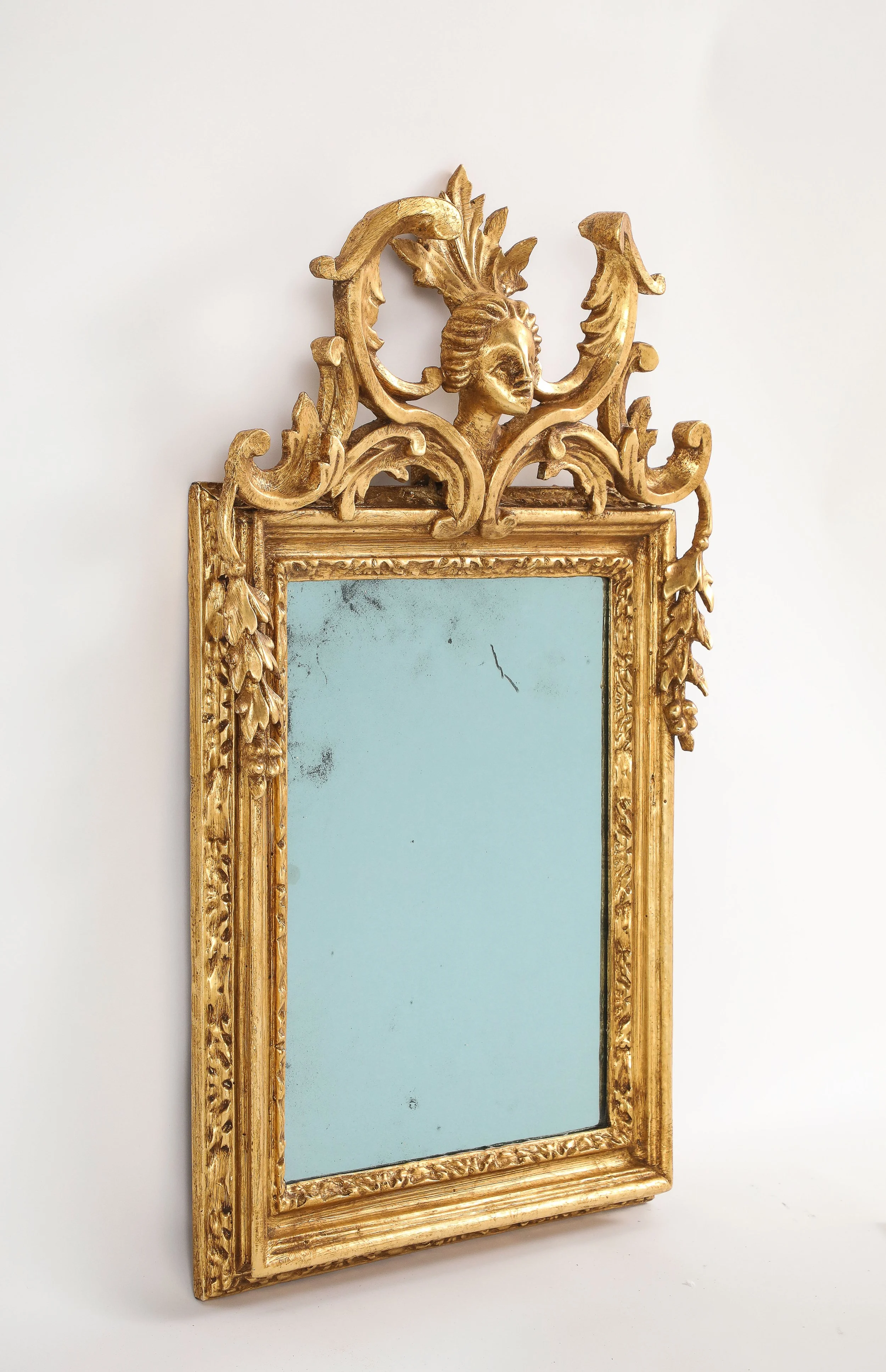 Image 11 of 14
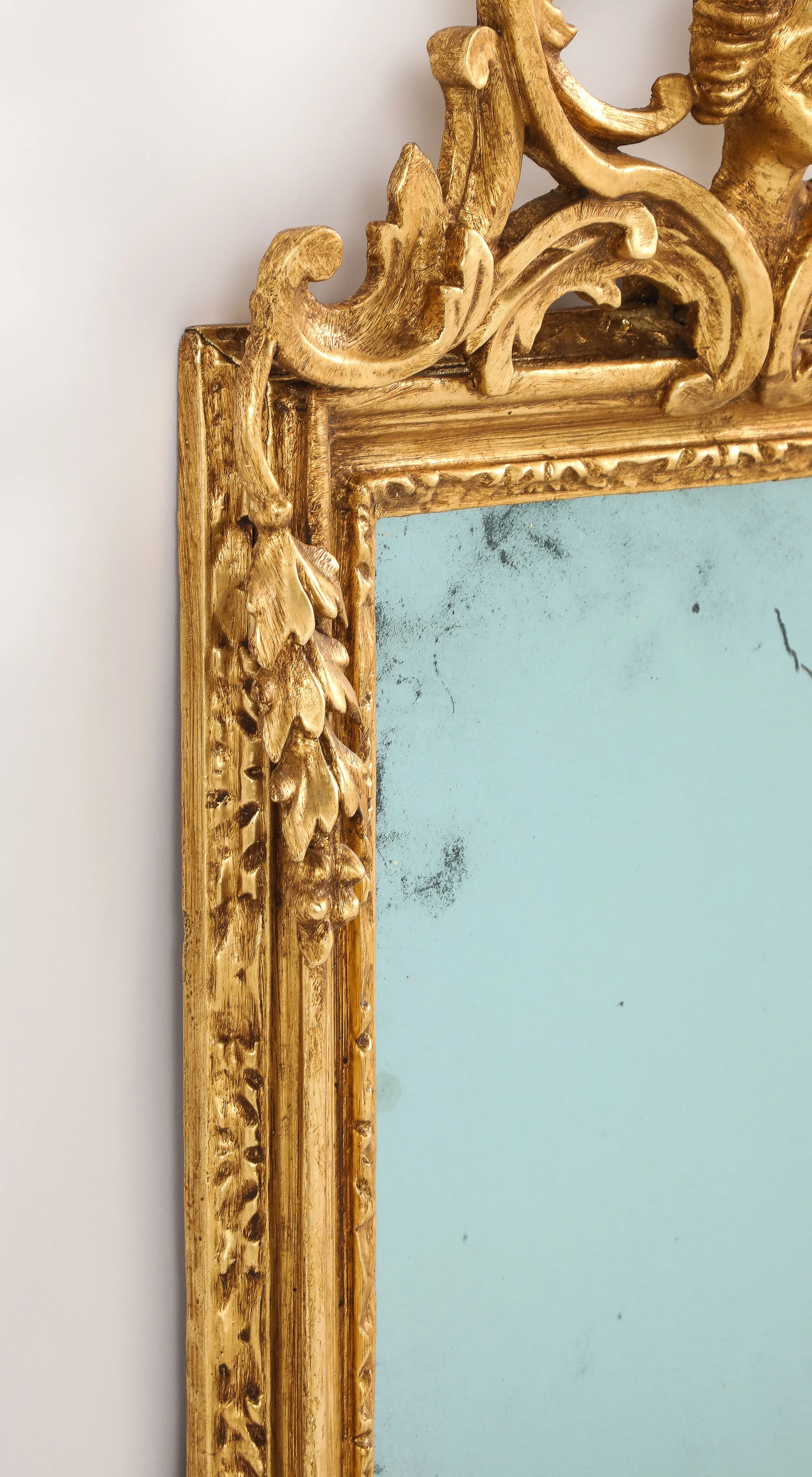 Image 12 of 14
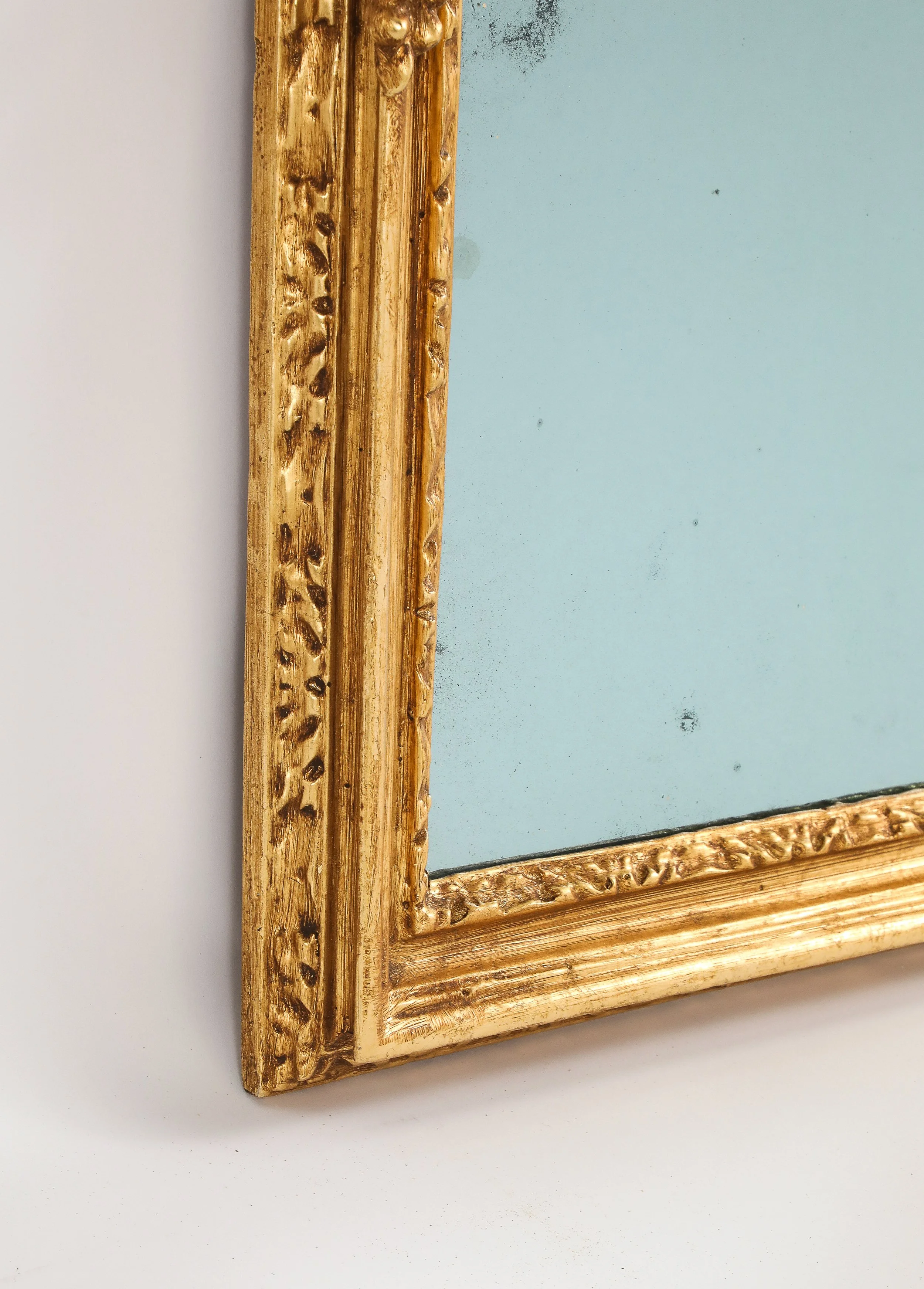 Image 13 of 14
 Image 14 of 14